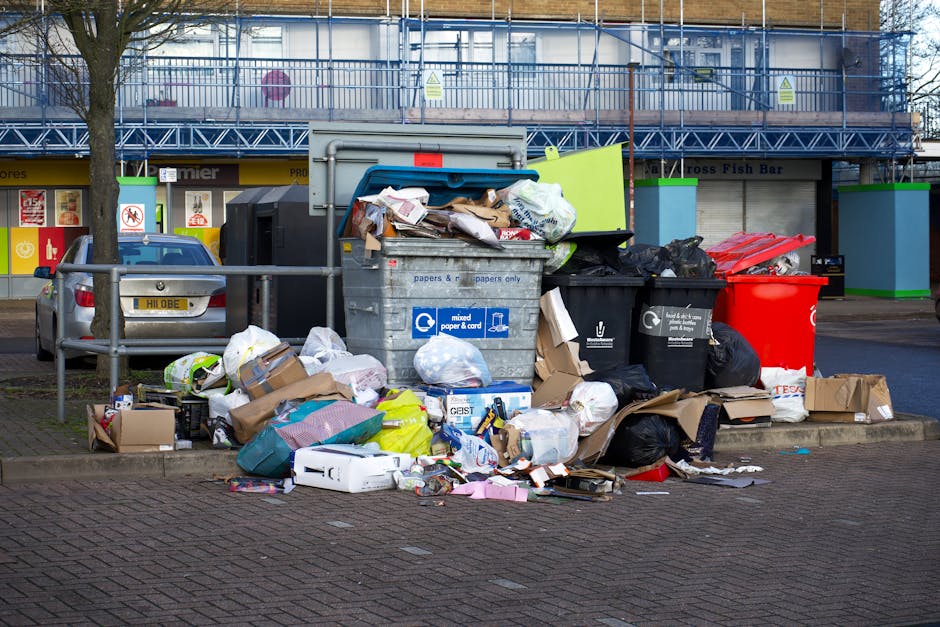
Common problems with flat rubbish access in Southwark blocks
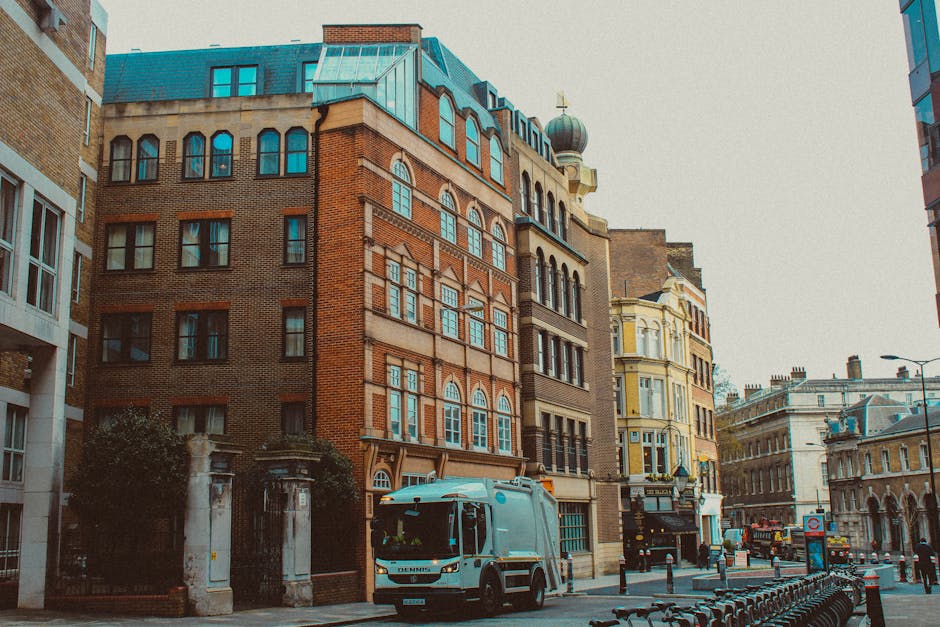
If you live in, manage, or clear rubbish from a flat block in Southwark, you already know the awkward bit is not always the waste itself. It is getting to it, moving it, and getting it out without upsetting neighbours, damaging stairs, or making a perfectly ordinary bin run feel like a small military operation. The common problems with flat rubbish access in Southwark blocks tend to come down to tight stairwells, shared entrances, parking restrictions, lift issues, and unclear responsibility for where rubbish should actually be left. This guide breaks those problems down in plain English and shows how to deal with them sensibly.
Whether you are arranging a one-off flat clearance, regular waste removal, or simply trying to stop bags piling up by the bin store again, the right approach saves time, reduces friction, and makes the whole place feel more manageable. Let's face it, nobody enjoys wrestling a sofa through a narrow communal hallway at 7:30 on a Tuesday morning.
Why Common problems with flat rubbish access in Southwark blocks Matters
Access problems sound minor until they stop a clearance from happening smoothly. In a Southwark block, one awkward bin route can affect the whole building: residents may miss collection windows, bulky items may sit in communal areas, and contractors may have to carry waste much further than expected. That creates avoidable delay, extra labour, and more opportunity for accidental damage.
It also matters because flats are shared spaces. One person's clutter can quickly become everybody's inconvenience. If rubbish is left in corridors, near fire exits, or beside the lift, it can create a mess, a smell, or a safety issue. You may not notice it at first, but by the next day it can become that faintly sour, stale smell in the hallway that everyone pretends not to have noticed. Nobody wants that.
There is also a practical cost. The harder it is to access a flat, bin store, or loading point, the more planning the job needs. If access is poorly understood, the team may need extra hands, trolleys, shorter carry distances planned in advance, or a different vehicle arrangement. That is why access is not a side detail. It is often the thing that decides whether a clearance is efficient or painfully slow.
Practical takeaway: in flat blocks, rubbish access is rarely just about "where the waste is." It is about routes, timings, permissions, neighbours, and whether the building layout supports safe removal at all.
For residents planning a larger clearance, it can help to think beyond just the bags and furniture. A service such as flat clearance or home clearance works best when access is checked first, not guessed.
How Common problems with flat rubbish access in Southwark blocks Works
In simple terms, rubbish access in a flat block is the path waste follows from the flat to the point where it can be collected or removed. In Southwark, that usually means moving through shared internal spaces, using lifts if available, passing through entry codes or locked doors, and getting outside to a vehicle or collection area without blocking others.
The process sounds straightforward. The reality is a bit messier. Common access points can include:
- internal stairwells with narrow turns
- small lifts that are not suitable for larger items
- shared hallways with limited space to stage items
- communal bin areas that are hard to reach with trolleys
- gated courtyards or car parks with restricted entry
- loading bays or street parking that are time-limited
Once you add everyday building life into the mix, things get complicated. Someone is leaving for work, a pushchair is coming down the corridor, the lift is already busy, and the refuse area is half full. It happens. More often than most people expect.
Access also depends on what type of rubbish is involved. A few bin bags are one thing. A broken wardrobe, mattress, or builders' waste is another entirely. Heavy or awkward items often require more thought, especially if you are using a service that handles furniture clearance, furniture disposal, or even builders waste clearance.
In practice, the best jobs are the ones where the team knows the building layout before arriving. That way they can plan the route, decide whether protective equipment is needed, and avoid creating a bottleneck in communal areas.
Key Benefits and Practical Advantages
Solving access problems in advance sounds dull, but it pays off quickly. A smooth rubbish removal process is safer, calmer, and usually cheaper than one that has to be improvised on the spot.
- Less disruption for neighbours: no one likes repeated trips through the same corridor with heavy items.
- Lower risk of damage: narrow staircases, walls, and communal doors stay in better condition.
- Faster turnaround: when access is sorted, the clearance can be completed more efficiently.
- Improved safety: fewer awkward lifts and fewer rushed manoeuvres on stairs.
- Cleaner shared spaces: rubbish is moved out before it becomes a hallway issue.
- Better planning for costs: access information helps avoid surprises on the day.
There is also a trust benefit, oddly enough. Residents tend to feel more confident when the process is explained clearly and handled without drama. A building that has a predictable waste routine feels more organised, even if the bin store is never going to win any beauty prizes.
If rubbish access is a recurring issue rather than a one-off, it may be worth looking at a broader arrangement such as waste removal or a business-style arrangement for mixed-use premises via business waste removal. For larger sites with regular maintenance, that is often more practical than solving the same problem every month.
Who This Is For and When It Makes Sense
This topic matters to a surprisingly wide range of people. If you think it is only for landlords and removals teams, think again.
- Flat owners clearing out after a move, refurb, or bereavement
- Tenants who need to remove bulky waste without causing trouble in the block
- Letting agents coordinating end-of-tenancy clearances
- Block managers dealing with repeated fly-tipping or overflow around bin stores
- Landlords preparing a flat for re-let
- Commercial occupants in mixed blocks with office waste or light business waste
It makes sense to plan ahead whenever the waste is more than a couple of bin bags, or when the building is likely to create a bottleneck. A small lift, a broken intercom, or a strict access code can turn a simple job into a frustrating one. Truth be told, many access problems are only obvious once someone is standing in the hallway with the items already loaded.
If your situation is more like a full flat clear-out than a few items, it is sensible to look at house clearance support as well, especially where possessions have spread into storage cupboards, loft spaces, or shared areas. For top-floor flats, a loft clearance may be part of the same job.
Step-by-Step Guidance
Here is a practical way to deal with rubbish access in Southwark blocks without making it harder than it needs to be.
- Check the building layout. Note stair width, lift size, entry points, bin store position, and any locked doors or gates.
- Identify the type of waste. Separate bagged rubbish, bulky household items, electricals, and anything that may need special handling.
- Confirm access times. Some blocks have quiet hours, concierge windows, or restrictions on vehicle loading.
- Clear the route first. Move loose items out of hallways and communal spaces so the path stays safe and open.
- Protect shared areas. Use coverings or careful handling where there is a risk of marks or scuffs.
- Plan the vehicle position. If parking is limited, decide in advance where the load will go.
- Communicate with residents or neighbours. A quick heads-up can avoid complaints and awkward surprises.
- Remove and sort responsibly. Separate reusable, recyclable, and non-recyclable materials where possible.
A small example: if a resident on the fourth floor is getting rid of a sofa, two wardrobes, and a pile of broken bags, the job is not really about the sofa. It is about the staircase, the lift booking, the parking, and the fact that someone downstairs may be taking a delivery at the same moment. That is the part people forget.
For situations involving mixed materials or construction leftovers, you may need to pair the clearance with recycling and sustainability considerations so the waste is handled in a more responsible way.
Expert Tips for Better Results
In our experience, the best outcomes come from good preparation, not clever lifting. A few simple habits make a real difference.
- Measure first, move later. Measure doorways, stair corners, and lift dimensions before the day if you can.
- Keep the route clear. One chair left in a corridor can become an annoying obstruction fast.
- Use the right equipment. Sack trucks, wheeled dollies, gloves, and protective coverings can save a lot of strain.
- Work in stages. It is usually better to move items in smaller loads than to overcrowd a hallway.
- Check lift rules. Some lifts are not suitable for heavy loads or dirty items. Obvious, maybe. Still missed all the time.
- Plan around busy periods. School runs, morning commuting, and evening return times can make shared areas hectic.
- Prioritise fire safety. Never leave rubbish where it blocks escape routes or access panels.
A practical but often overlooked tip: if the block has a recycling point, ask whether items can be pre-sorted before moving them. That reduces the amount of carrying you need to do later. Small win, but helpful.
If you are booking a service, ask how the team handles access issues before the van arrives. It is much better to hear "we will bring the right kit" than to discover, on the day, that everyone is improvising with a wobbling kitchen trolley.
Common Mistakes to Avoid
Most access problems are not dramatic mistakes. They are ordinary oversights that snowball.
- Assuming the lift will do the job: many lifts are too small for larger furniture or stacked rubbish.
- Leaving everything until the last minute: a rushed clearance is more likely to cause damage or complaint.
- Blocking the hallway "just for a moment": that moment often turns into ten minutes and a lot of frustration.
- Not checking parking first: if the vehicle cannot stop nearby, the carry distance becomes longer and slower.
- Ignoring mixed waste: food waste, electronics, and general rubbish all behave differently in a clearance.
- Forgetting the neighbours: a quick text or notice can prevent unnecessary tension.
- Underestimating bulky items: a mattress is never just a mattress when it is on the third floor.
There is also a subtle mistake people make with bigger jobs: they focus only on the exit route and forget the entry route. If items come from a storage cupboard, loft, or rear room, that route matters too. Access is a whole chain, not one doorway.
Tools, Resources and Recommendations
You do not need a huge toolkit to handle access well, but a few practical items make the process far easier.
| Tool or resource | Why it helps | Best for |
|---|---|---|
| Sack truck or trolley | Reduces manual lifting and speeds up movement | Boxes, bagged waste, small appliances |
| Protective blankets or covers | Helps avoid scuffs on walls, doors, and flooring | Bulky furniture and tight stairwells |
| Gloves and sturdy footwear | Improves grip and reduces injury risk | General clearances |
| Bin bags and sorting containers | Keeps the load organised | Mixed household rubbish |
| Building access notes | Reminds everyone about codes, lift details, and parking | Managed blocks and shared entrances |
It also helps to keep a simple written note of the building's quirks. Which entrance is easiest? Which gate sticks? Is the lift key needed? Does the concierge prefer afternoon calls? These are tiny details, but they matter.
For residents comparing support options, it may help to review pricing and quotes before booking. Access complexity often influences the final cost, so clear information up front usually leads to a more accurate quote. If you want to understand the company itself before booking, about us can be useful background as well.
Law, Compliance, Standards and Best Practice
Access issues are not just about convenience. They touch on safety, building management, and responsible disposal. You do not need to be a legal expert to handle them well, but a few best-practice principles are worth keeping in mind.
In UK flat blocks, communal areas should not be used in ways that create avoidable hazards. That means keeping corridors clear, avoiding fire exits being blocked, and not leaving items in shared spaces for longer than necessary. Where a building has its own rules, those should be respected too. Concierge instructions, access controls, and resident notices are there for a reason, even if they sometimes feel a bit fussy.
Safe handling matters as well. Heavy lifting should be kept under control, especially on stairs or around corners. If a job looks awkward, the right answer is not to "just give it a go." It is to slow down, reassess, and use a safer method. That sounds obvious written down, but in the moment people do get a bit optimistic.
Responsible waste handling also means using appropriate disposal methods for different materials. Reusable items may be suitable for a separate clearance route, while broken or contaminated waste may need a different approach. If you are dealing with household, furniture, or mixed waste, checking the provider's health and safety policy and insurance and safety information is a sensible step. For businesses or managed buildings, reviewing terms and conditions can help set expectations before anyone starts moving heavy items around.
Options, Methods, or Comparison Table
There is no single best way to deal with rubbish access in a Southwark block. The right method depends on volume, item size, building layout, and how quickly the waste needs to go.
| Method | Best for | Pros | Limitations |
|---|---|---|---|
| Residents moving items themselves | Small volumes and light bagged waste | Simple, low cost, flexible | Can be slow and awkward in tight blocks |
| Scheduled block collection | Regular communal waste | Predictable and tidy | Less flexible for bulky items |
| Professional flat clearance | Bulky, mixed, or time-sensitive waste | Efficient and safer for heavy items | Requires good access planning |
| Targeted furniture disposal | Single items or a few large pieces | Useful for sofas, beds, wardrobes | Still needs route and parking planning |
If you are only shifting a couple of bags, a simple approach may be enough. But once items are heavy, numerous, or awkward to carry, the balance shifts quickly toward a planned clearance. That is particularly true in older Southwark blocks where stair angles can be unforgiving. Not impossible. Just a bit annoying, to be honest.
Case Study or Real-World Example
A typical example comes from a top-floor flat in a block with one small lift and a narrow shared staircase. The resident had accumulated an old armchair, a dismantled bed frame, several bags of general rubbish, and a few broken household bits from a recent tidy-up.
The first issue was not volume; it was route planning. The lift was too tight for some items, the corridor near the entrance was narrow, and the building had limited on-street stopping space. Rather than trying to force everything through the lift, the team split the job into two parts: smaller bagged items were moved first, and the larger furniture was taken via the safer staircase route with protection in place.
The result was a much calmer clearance. The hallway stayed clear, the resident's neighbours were not disrupted for long, and the building was left tidy. No drama, no chipped paint on the corner by the post boxes, no one muttering under their breath. Just done properly.
That is usually the lesson with flat access problems. Once you treat the building as part of the job, not just the backdrop, everything becomes easier.
Practical Checklist
Use this simple checklist before arranging rubbish removal from a Southwark block.
- Have you checked the stairwell, lift, and corridor space?
- Do you know which entrance or access code will be used?
- Is there a suitable place for the vehicle to stop or park?
- Have you separated bulky items from bagged rubbish?
- Are any items likely to need special handling?
- Will neighbours or building management need advance notice?
- Are fire exits and communal walkways staying clear?
- Do you need coverings to protect walls or flooring?
- Have you confirmed the expected timing of the clearance?
- Is there a backup plan if the main route is blocked?
Quick sanity check: if the answer to any of those is "not sure," it is worth pausing and sorting that out before the rubbish starts moving. Saves headaches later.
For a more detailed conversation about your building's access issues, contact us when you are ready to talk through the job.
Get a free quote today and see how much you can save.
Conclusion
Common problems with flat rubbish access in Southwark blocks usually come down to the same handful of issues: narrow routes, limited parking, shared spaces, awkward lifts, and a lack of planning. None of these are unusual. What matters is how you respond to them.
With the right preparation, the job becomes much simpler. Measure the route, understand the building rules, keep communal areas clear, and think through the final carrying distance before anyone lifts a thing. That is the difference between a rushed, stressful clearance and one that feels calm and controlled.
If you are dealing with a one-off flat clear-out or a recurring waste issue, the smartest next step is usually the boring one: plan properly, communicate early, and choose the right service for the space. It really does make life easier.
And once it is all done, there is a strange little relief in seeing a clear hallway and a tidy bin area again. Small thing, maybe. But it changes the feel of the whole block.
Frequently Asked Questions
What are the most common access problems in Southwark flat blocks?
The most common issues are narrow staircases, small lifts, limited parking, locked entrances, and shared corridors that are too tight for bulky items. Bin stores can also be awkward to reach.
Why does rubbish access matter so much in apartment buildings?
Because poor access slows everything down, increases the chance of damage, and can create clutter in communal areas. In a shared block, one delayed clearance can affect many residents.
Can bulky items be removed through a small lift?
Sometimes, but not always. It depends on the size and shape of the item, the lift dimensions, and any building rules. In many cases, stairs or a different route are safer.
How do I know if my flat block access is suitable for clearance?
Check the staircase width, lift size, entry codes, parking space, and route to the vehicle. If any of those are tight or uncertain, it is worth planning in more detail before the day.
What should I do if rubbish is blocking the communal hallway?
Remove it as quickly as possible and avoid leaving it in a fire escape route or shared corridor. If it is a recurring problem, speak to the building manager or arrange a proper clearance.
Does access difficulty usually affect the price?
Often, yes, because awkward access can mean more time, more labour, or extra equipment. Clear information before the job usually leads to a more accurate quote.
What kind of items cause the biggest access issues?
Wardrobes, sofas, bed frames, mattresses, white goods, and mixed builder-style waste tend to be the most awkward. They are bulky, heavy, and often hard to turn in narrow spaces.
How can I prepare a Southwark flat for rubbish removal?
Clear the route, separate items, check access times, and tell neighbours or the block manager if needed. A bit of prep makes the actual removal far smoother.
Is it better to handle flat rubbish access myself or use a service?
For a few small bags, doing it yourself may be fine. For bulky, heavy, or mixed waste, a professional service is usually safer and less stressful.
What if the building has restrictions on entry or loading times?
Then those restrictions need to shape the plan. Try to arrange the clearance within the permitted window and confirm any codes or access rules ahead of time.
How do I avoid damaging walls, lifts, or doors during removal?
Use protective covers where needed, move slowly around corners, and avoid rushing large items through tight spaces. The slower route is often the safer one.
What is the best first step if I am not sure about my block's access?
Measure the route, note the building restrictions, and speak to the provider before booking. A brief check now can prevent a lot of stress later.
For more background on the company and how it works, you can also review about us, or explore its approach to responsible disposal through recycling and sustainability.