Health and Safety Policy — House Clearance Southwark
Purpose: This policy sets out the commitment of our house clearance and rubbish removal teams to maintain safe working conditions across all operations. It applies to every person engaged in house clearance Southwark activities, including contractors and temporary staff. The aim is to prevent injury, protect property, and ensure that rubbish collection and disposal are managed responsibly with clear safety standards.Scope and responsibilities
Our rubbish company in Southwark recognises that effective health and safety requires clear roles. Managers are responsible for ensuring risk assessments are conducted, training is provided, and resources such as personal protective equipment are available. Operatives must follow safe systems of work, report hazards, and use equipment correctly. All personnel are encouraged to contribute to continuous improvement of safety practices.
Risk assessment and control measures
A proactive approach to risk management underpins house clearance in Southwark operations. Before any clearance, a documented risk assessment must identify hazards such as sharp objects, asbestos suspicion, heavy lifting, unstable structures, and traffic exposure during rubbish removal. Controls include segregation of hazardous items, correct disposal routes, and use of mechanical aids where possible. Every assessment is reviewed when working conditions change.Personal protective equipment and clothing
Appropriate PPE is provided and must be worn: durable gloves, high-visibility clothing, steel-toe boots, eye protection, and dust masks where required. Supervisors will confirm PPE standards and ensure replacements are available. Employees must maintain PPE in good condition and report defects. Wearing correct protective clothing reduces the risk of cuts, punctures and contamination during clearances.Training and competence are central to safe house clearance operations. Induction covers manual handling, safe lifting techniques, hazardous waste awareness, and vehicle loading. Ongoing refresher sessions and practical demonstrations increase competency for rubbish removal Southwark tasks. Records of training are maintained to ensure that each operative is equipped with the knowledge and skills to work safely.
 Manual handling and mechanical aids: Lifting guidelines are enforced to minimise musculoskeletal injury. Teams use trolleys, sack trucks, hoists, and lifting straps where appropriate. Job-specific method statements describe how to move bulky items such as furniture, white goods and construction debris. Where tasks exceed safe manual handling thresholds, mechanical lifting equipment must be used.
Hazardous materials and segregation: Any items suspected of containing hazardous substances (chemicals, asbestos-containing materials, sharps) are treated as a priority risk. Identified hazardous waste is isolated, labelled and managed according to accepted hazardous waste handling protocols before transfer to authorised disposal streams. Workers are instructed never to assume items are safe and to seek guidance where uncertainty exists.
Vehicle safety and site traffic management: Vehicles used for rubbish collection are routinely inspected and maintained. Load security and correct weight distribution are enforced to prevent road and site accidents. Site-specific traffic plans control vehicle and pedestrian movement during clearances. Drivers are required to follow safe loading procedures and conduct pre- and post-trip checks.
Emergency procedures and incident reporting: Clear processes exist for first aid, fire response, and spillage control. All incidents, near misses and injuries must be reported promptly so that root causes are identified and corrective actions implemented. Reporting supports learning and reduces the risk of recurrence across all house clearance and rubbish removal activities.
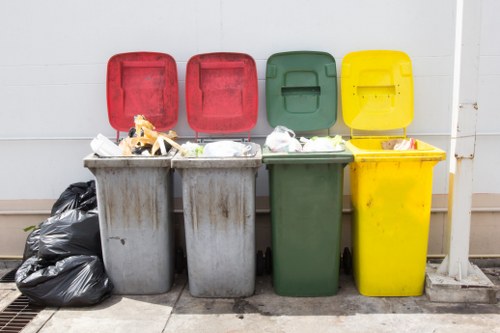 Environmental controls and waste transfer: Minimising environmental impact is integral to our policy. Recyclable materials are segregated where possible, and waste transfer follows best practice to reduce contamination. Operatives are trained in identifying recyclable streams and ensuring that mixed loads are avoided. This approach supports sustainable rubbish company services while maintaining safety standards on site.
 Monitoring, review and continuous improvement: Health and safety performance is monitored through regular inspections, audits and feedback from staff. Key performance indicators, such as incident rates and completion of safety training, inform management reviews. Policies are revised as necessary to reflect operational changes, new risks or improvements in industry practice for Southwark house clearance teams.
Support and wellbeing: Our policy recognises that worker wellbeing influences safety. Provision for rest breaks, support pathways for stress and fatigue, and a culture that encourages raising concerns are all part of maintaining a safe workforce. Good communication and a respectful working environment help ensure that safety procedures are followed consistently during every clearance or rubbish collection operation.
Compliance and supply chain expectations: All contractors and partners engaged in house clearance Southwark work must demonstrate equivalent health and safety standards. Subcontractors are required to follow this policy when operating on behalf of the company, and to provide evidence of training, insurance and safe systems of work. Cooperation within the supply chain ensures consistent protection for employees, clients and the public.
Conclusion: This Health and Safety Policy reflects the commitment to safe, responsible and professional house clearance and rubbish removal services. It balances operational efficiency with the wellbeing of staff and the protection of the environment. Regular communication, training, monitoring and review ensure that our teams deliver secure and compliant clearances throughout our service area.